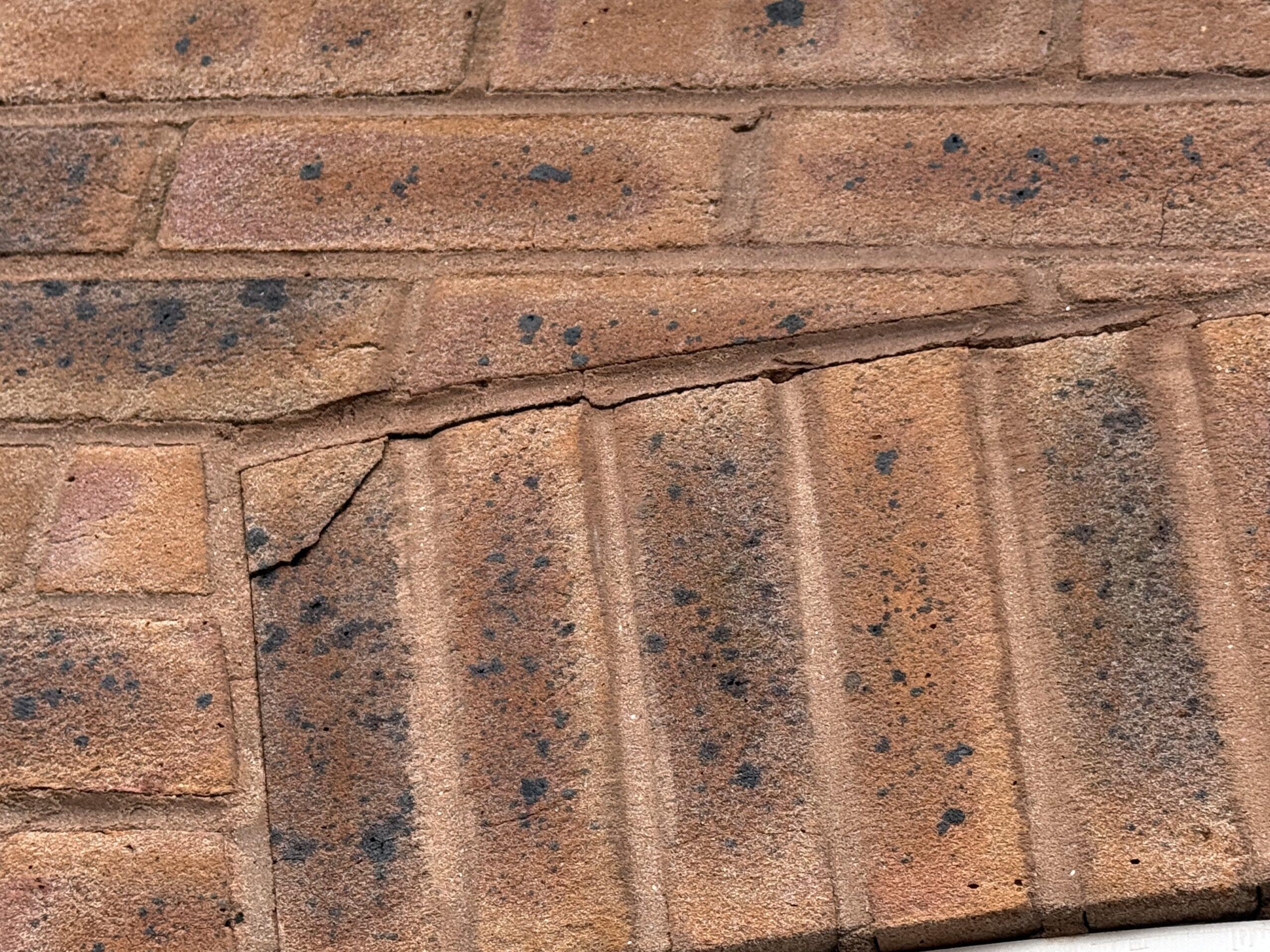
Cracks in walls are one of the things that makes buyers most anxious — and with good reason. But the truth is that the vast majority of wall cracks in UK properties are completely harmless. The trick is knowing the difference.
In my 18 years of surveying properties in Croydon, I'd estimate that around 85–90% of the cracks I see are benign — they're just the natural movement of a building responding to temperature, moisture and the passage of time. The remaining 10–15% need attention.
Here's how to tell them apart.
Types of Wall Cracks: A Quick Taxonomy
Before we get into severity, it helps to understand the basic types of crack by their direction and pattern:
- Horizontal cracks in brick walls — often indicate lateral pressure (potentially from soil movement behind a retaining wall), or in solid walls, settlement of the inner or outer leaf
- Vertical cracks — often indicate differential settlement (the two sides of the crack have moved at different rates) or thermal/moisture movement
- Diagonal (staircase) cracks following mortar joints — the classic pattern of subsidence or differential settlement; the direction of the diagonal gives clues about where movement has occurred
- Diagonal cracks cutting through bricks — generally more serious than those following mortar joints, as they indicate higher stress levels
- Map cracking / crazing in plaster or render — usually just surface shrinkage cracking; rarely structural
Harmless Cracks: Don't Panic About These
Hairline cracks in plaster (under 0.1mm), shrinkage cracks in newly built or recently plastered walls, small vertical cracks in mortar joints, and fine map cracking in render are all very common and very rarely structural.
1. Hairline plaster cracks — virtually every older property will have these. They occur as buildings settle and as plaster dries and moves seasonally. Width under about 0.1mm (a human hair). No action needed beyond cosmetic repair.
2. Shrinkage cracks around new plasterwork — if a property has recently been replastered, expect fine cracking as the plaster cures. Normal and harmless.
3. Cracks along the line where walls meet ceilings — almost always caused by the natural seasonal movement of timber roof structures. Very common in Victorian and Edwardian properties. Harmless cosmetically; close in winter when the wood contracts, open slightly in summer.
Potentially Serious Cracks: Investigate These
These cracks warrant closer investigation but don't necessarily indicate disaster:
Diagonal staircase cracks in brick — particularly if they're wider than about 5mm or appear on external walls, these need professional assessment. They may indicate differential settlement which has since stabilised (very common in Victorian properties) or may be ongoing.
Cracks wider than 5mm — any crack wider than 5mm (roughly the width of a finger) in a masonry wall warrants investigation. Width alone doesn't determine severity, but it's a useful red flag trigger.
Cracks that have recently appeared or are growing — the most important factor with any crack is whether it's active (still moving) or historic (movement has stopped). Monitoring cracks with tell-tales (small plaster bridges across the crack) over a period of weeks tells you whether movement is ongoing.
Very Serious Cracks: Act Now
Horizontal cracks in external walls (potentially indicating lateral movement), cracks wider than 25mm, cracks that have appeared suddenly and/or are associated with other signs of movement (sticking doors, sloping floors), and any cracking accompanied by wall bowing or leaning.
These scenarios require immediate professional assessment. In extreme cases, they may indicate active subsidence (ground movement beneath the foundations), structural failure or a significant change in ground conditions.
The BRE Classification System for Crack Severity
The Building Research Establishment (BRE) has a widely used classification system for crack severity in buildings:
| Category | Max Width | Description | Action |
|---|---|---|---|
| 0 — Negligible | <0.1mm | Hairline cracks in plaster | None |
| 1 — Very slight | Up to 1mm | Fine cracks easily treated by decoration | Redecorate |
| 2 — Slight | Up to 5mm | Cracks visible; some repointing required | Monitor |
| 3 — Moderate | 5–15mm | Gaps in brickwork; some repairs needed | Investigate |
| 4 — Severe | 15–25mm | Extensive repair; structural assessment required | Engineer |
| 5 — Very severe | >25mm | Major structural instability; rebuilding likely | Urgent |
What to Do If You Find Cracks in a Property
If you're viewing a property and spot cracks:
- Don't assume the worst — most cracks are harmless, but get them professionally assessed
- Don't assume you know the cause — estate agents, vendors and even well-meaning friends will speculate. Only a RICS surveyor can give you a reliable assessment
- Commission a Level 3 building survey — this will assess all visible cracking in context, categorise it by severity and recommend action where needed
- If the survey flags potential subsidence, the surveyor will recommend further investigation by a structural engineer — don't skip this step
Worried About Cracks in a Property?
Our Croydon surveyors can assess them and give you an honest, clear opinion.
Book a Defect Assessment